| Home | Sitemap | Our Network | Services | About Us | Contact Us | Link Exchange |
 |
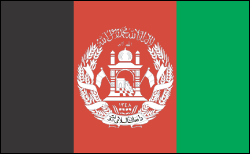

Total area: 250,000 sq mi (647,500 sq km)
Population (2009 est.): 33,609,937 (growth rate: 2.6%); birth rate: 45.4/1000; infant mortality rate: 151.9/1000; life expectancy: 44.6; density per sq mi: 128
Provincial and presidential elections were held on August 20, 2009, despite calls by the Taliban to boycott the elections and the militia's attendant threats to harm those who cast votes. Violence spiked in the days leading up to the elections.
More than 30 candidates challenged incumbent Karzai, with Abdullah Abdullah as the most formidable contender. Abdullah, who served under Karzai as minister of foreign affairs until 2006, ran as head of the United National Front opposition alliance.
More than 30 candidates challenged incumbent Karzai, with Abdullah Abdullah as the most formidable contender. Abdullah, who served under Karzai as minister of foreign affairs until 2006, ran as head of the United National Front opposition alliance.
The U.S. had 34,000 troops in Afghanistan during the summer of 2008, the highest level since 2005, but that was not enough to stem growing violence in the country or the resurgence of the Taliban and al-Qaeda. Indeed, June 2008 was the deadliest month for U.S. and coalition troops since the American-led invasion began in 2001.
Forty-six soldiers were killed; there were 31 U.S troop deaths in Iraq during the same period. In addition, a Pentagon report indicated that the U.S. is facing two separate insurgencies in Afghanistan: the Taliban in the south and a collection of militant bands in the east, which borders Pakistan.
Forty-six soldiers were killed; there were 31 U.S troop deaths in Iraq during the same period. In addition, a Pentagon report indicated that the U.S. is facing two separate insurgencies in Afghanistan: the Taliban in the south and a collection of militant bands in the east, which borders Pakistan.
The Taliban continued to attack U.S. troops throughout 2005 and 2006—the latter becoming the deadliest year for U.S. troops since the war ended in 2001. In 2004 and 2005, American troop levels in Afghanistan gradually increased to nearly 18,000 from a low of 10,000.
Throughout the spring of 2006, Taliban militants—by then a force of several thousand—infiltrated southern Afghanistan, terrorizing local villagers and attacking Afghan and U.S. troops. In May and June, Operation Mount Thrust was launched, deploying more than 10,000 Afghan and coalition forces in the south.
Throughout the spring of 2006, Taliban militants—by then a force of several thousand—infiltrated southern Afghanistan, terrorizing local villagers and attacking Afghan and U.S. troops. In May and June, Operation Mount Thrust was launched, deploying more than 10,000 Afghan and coalition forces in the south.
On Oct. 7, after the Taliban repeatedly and defiantly refused to turn over Bin Laden, the U.S. and its allies began daily air strikes against Afghan military installations and terrorist training camps. Five weeks later, with the help of U.S. air support, the Northern Alliance managed with breathtaking speed to take the key cities of Mazar-i-Sharif and Kabul, the capital.
On Dec. 7, the Taliban regime collapsed entirely when its troops fled their last stronghold, Kandahar. However, al-Qaeda members and other mujahideen from various parts of the Islamic world who had earlier fought alongside the Taliban persisted in pockets of fierce resistance, forcing U.S. and allied troops to maintain a presence in Afghanistan. Osama bin Laden and Taliban leader Mullah Muhammad Omar remained at large.
On Dec. 7, the Taliban regime collapsed entirely when its troops fled their last stronghold, Kandahar. However, al-Qaeda members and other mujahideen from various parts of the Islamic world who had earlier fought alongside the Taliban persisted in pockets of fierce resistance, forcing U.S. and allied troops to maintain a presence in Afghanistan. Osama bin Laden and Taliban leader Mullah Muhammad Omar remained at large.
By mid-April 1992 Najibullah was ousted as Islamic rebels advanced on the capital. Almost immediately, the various rebel groups began fighting one another for control. Amid the chaos of competing factions, a group calling itself the Taliban—consisting of Islamic students—seized control of Kabul in Sept. 1996.
It imposed harsh fundamentalist laws, including stoning for adultery and severing hands for theft. Women were prohibited from work and school, and they were required to cover themselves from head to foot in public. By fall 1998 the Taliban controlled about 90% of the country and, with its scorched-earth tactics and human rights abuses, had turned itself into an international pariah.
It imposed harsh fundamentalist laws, including stoning for adultery and severing hands for theft. Women were prohibited from work and school, and they were required to cover themselves from head to foot in public. By fall 1998 the Taliban controlled about 90% of the country and, with its scorched-earth tactics and human rights abuses, had turned itself into an international pariah.
During the cold war, King Mohammed Zahir Shah developed close ties with the Soviet Union, accepting extensive economic assistance from Moscow. He was deposed in 1973 by his cousin Mohammed Daoud, who proclaimed a republic. Daoud was killed in a 1978 coup, and Noor Taraki took power, setting up a Marxist regime. He, in turn, was executed in Sept. 1979, and Hafizullah Amin became president. Amin was killed in Dec. 1979, as the Soviets launched a full-scale invasion of Afghanistan and installed Babrak Karmal as president.


Geography
Afghanistan, approximately the size of Texas, is bordered on the north by Turkmenistan, Uzbekistan, and Tajikistan, on the extreme northeast by China, on the east and south by Pakistan, and by Iran on the west. The country is split east to west by the Hindu Kush mountain range, rising in the east to heights of 24,000 ft (7,315 m). With the exception of the southwest, most of the country is covered by high snow-capped mountains and is traversed by deep valleys.
Copyright © 2009 - 2010. S. VINUKIRAN CHILLAPPLE Groups.
This site is a unit of S. VINUKIRAN CHILLAPPLE Groups. Powered by Blogger
